Overview
You have
found a D&D group  https://groupfinder.eu/list
, your characters are ready and the players are hyped for the start of the game. However there is a thought that keeps cropping up in the back of your head: “
What if they take the story in a direction I don’t feel comfortable with?”
Tabletop roleplaying games are built on imagination and improvisation. Therefore setting boundaries might feel wrong or tricky. Perhaps you or someone else has a phobia of spiders, or some situations might make you uncomfortable. This is where
safety tools come to play.
Before you start thinking that these are borderline “censorship” methods - they are communication shortcuts that ensure everyone in your group is having fun, even if the story gets dark or brutal.
What are safety tools?
Think of safety tools as subtle “safe words” in a stunt show or a timeout in sports. It doesn’t mean that the show can’t go on, instead it allows for the participants to pause, edit or skip certain bits of content that might not be something everyone is comfortable with.
It avoids the need for that awkward, long speech about themes and decisions while making some people feel uncomfortable with either expressing their creativity or feeling targeted in another way. When everyone at your group knows where the “
emergency brake” lever is, players usually feel more comfortable with intense roleplay situations, as everyone feels more in control of the direction the story is going.
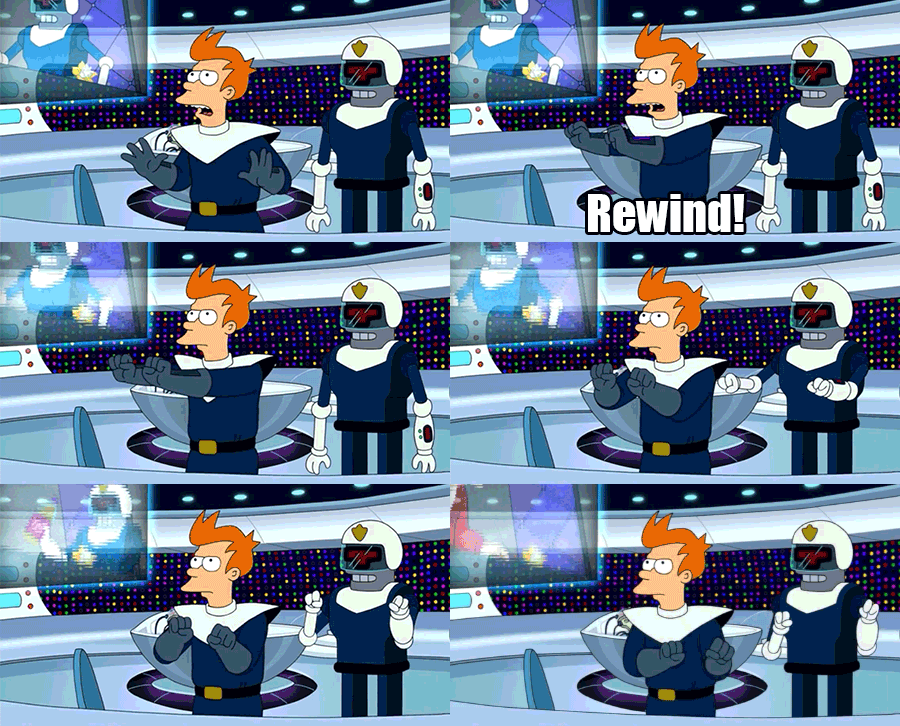
If the game goes in a direction that everyone is comfortable with - rewind.
The big three
Lines and Veils
This is a list that is collaboratively created during
Session Zero https://groupfinder.eu/library/session-0-checklist-how-to-build-a-dnd-group-that-lasts. Everyone agrees upon setting limitations regarding various topics and when to let the story progress in a “skip cutscene” manner.
Lines: Hard boundaries. If a “line” is drawn at harming animals, these situations do not occur in your games.
Veils: A soft boundary - this is more of a “fade to black” moment, where the story overlooks specific details and situations, but still acknowledges their existence.
The X-card
If a situation makes you uncomfortable, signaling (either with a physical card with an X on it, or writing it in the chat) the
X-card https://docs.google.com/document/d/1SB0jsx34bWHZWbnNIVVuMjhDkrdFGo1_hSC2BWPlI3A/edit?tab=t.0 means that whatever is going on is skipped or retconned. The game continues but avoids the specific direction it is currently headed. This is a
no questions asked situation. You don’t have to explain why this situation bothers you, a healthy group will respect your choice and preference and move on.
Open door policy
In a situation, where you do not feel comfortable, you are permitted to simply get up and leave the table to either “take five” or stay away until the current situation is resolved. Or if the theme is simply overwhelming, you can excuse yourself for the rest of the session. It is important that the group agrees beforehand to respect the open door approach and will not judge the person choosing to opt out.
“This will ruin the mood!”
As a DM (or a player), you might fear that using safety tools will break the immersion. In reality, the opposite is true - players knowing that they and their preferences are respected will keep everyone on the same page.
When a group has no discussed boundaries beforehand, players are likely to simply “shut down” during specific situations and simply disconnect either mentally or digitally from the game at hand. Since the story involves everyone in the group, everyone should feel like they want to be part of it.
Knowing beforehand which themes and topics may be an issue for your players will help everyone in the group focus more on the game, and less on worrying or playing the “guessing game”, wondering whether the topic at hand is appropriate for everyone.
How to react when a tool is used
If you are the DM and someone uses the X-card or reminds of a “line”, here is a professional way to handle it:
Stop. Pause the narration or situation immediately.
Acknowledge. Say “Thanks for letting me know.” Don’t ask “Why” or try to downplay the situation. Respect the player and their decision
Adjust. Change the scene. Feel free to “rewind” the scene and take it in a different direction. Instead of spiders in the room, there are goblins, wolves, mimics, dragons (okay lets not overdo it…), or nothing at all.
Check-in. A quick “Everyone good?” to check whether the situation has been resolved. And continue the game.
Why do we promote using safety tools?
When meeting new people for the first time, you don’t have years of history to know what their triggers or boundaries are. And circling back to the “guessing game” - you shouldn’t be expected to know these. Instead clear communication will help your group in the long run.
Using safety tools should be seen as a strong
green flag. It tells others that you are a thoughtful player or a DM, who cares about the people behind the characters. You will turn the group of strangers into trusted players much faster.
Be a brave player
Great tabletop gaming stories are ones where players take risks, are vulnerable, come up with stupid plans (that somehow work) and defeat villains. Safety tools will guide your game in a direction where you don’t step on anyone’s toes and lets you focus on the game at hand.
Ready to get into a game? Post your
player profile https://groupfinder.eu/players on Groupfinder, or
find a group https://groupfinder.eu/list where you can gather other like-minded, respectful, players.
If you know of a DM, who is looking to level up their group management - then share this article with them and help make the tabletop community a better and more enjoyable place for everyone.
If you are ready to jump into a game, head over to our directory to find a D&D group https://groupfinder.eu/lfg/dnd looking for players right now.