Covering the basics: Making a character

Published April 20, 2026 by Groupfinder Team

Overview

Covering the basics https://groupfinder.eu/library?category=guides-how-to&search=f1=133” is a easy-to-follow set of articles helping players get through the first steps of the game. You found a game to join? Well done, but now what?

A character

What makes a good character to play? Is it optimizing your stats to be the most overpowered character? Picking the right skills, feats, powers or spells? For some players, yes - that is important. And at the end of the day, you don’t want to end up with a character who will be outdone by everyone else in your party. But at the same time, your character should be more than just useful - they should be interesting. They are more than just “Human Fighter” or an “Elf Ranger”. When creating a character, what is important, but to create a character the other players and the world will want to interact with, focusing on who is even more vital. We will not be focusing on the intricate details of how you should create your character sheet, instead the article will serve as a guideline of how to flesh out your new hero (or anti-hero).
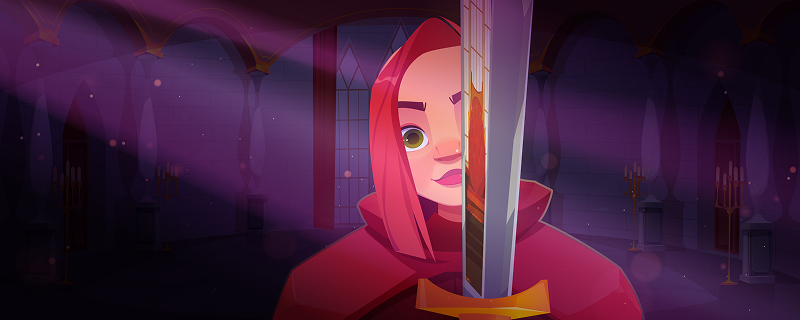
Your character should be more than just a two-dimensional adventurer. Make them real and the game will treat them as such.

Who is your character?

To start weaving your character into someone interesting, you need to find that core concept to start building around.   For inspiration, think back at some characters from a book, movie, tv show, game or real life. Find someone that has that core essence that you feel would be interesting to roleplay. Perhaps Rincewind the tourist from Discworld, Beorn from The Hobbit, Donna from Doctor Who or perhaps Esquie from Clair Obscur. Whichever character comes to you as someone you’d like to somehow pay homage to, can be worked with. Think of what makes that character interesting to you, is it their attitude towards problems, other people or nature. Are they clumsy, perceptive, analytical or indifferent towards things? The way they see the world is a great direction to have. Now the end-goal is not to copy the character 1 to 1. That is almost never going to work. The nature of the game is likely to be very much based on random outcomes, no matter how well-planned and foolproof your approach is. As dice determine the success of various attempts, it is best to keep that in mind.   A bad roll can turn your James Bond into Johnny English.

Flesh them out

If you have a core concept, you can start working on making them more real. Ask yourself various questions about them. “What made them like this?” “Why would they be adventuring?” “Is there a problem they are running from?” “What is their favourite dish?” Yes, even figuring out their favourite food can be a great process of figuring out who they are. It might not be a fact that would ever come to play, but can be a good stepping stone to actually understanding them. Knowing their favourite dish or colour can be helpful when diving deeper into that answer. Their favourite colour is pink - why? Did they grow up in a house that had pink wallpaper? Or was there an ever-blooming cherry blossom tree that they have fond memories of? Where was that tree? Does it hold some significance to them? Was there another person involved with that fondness? What happened to them? And so forth. Just like actual humans have preferences that don’t derive from nothing - neither should your character. The more you ask, the more real they become through this. It is highly recommended to write those points down - so you have a written understanding of them. And you can later refer back to the document to remind yourself of who they are.
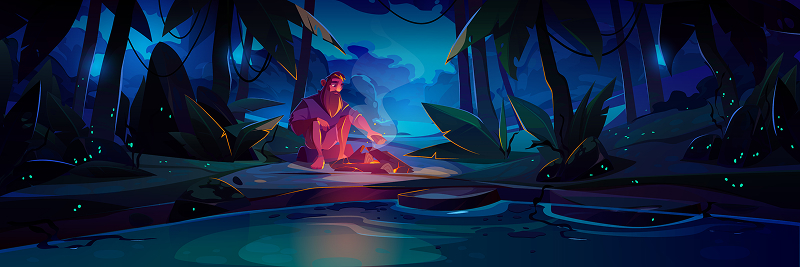
What made them like this? A tragic event in their past or a goal they haven't yet reached?

Backstory

Ask your GM questions about the world and the setting. The more you understand, the easier it will be for you to place them there. If your GM is willing to work with you to flesh out the world around your character’s past, you will end up adding towns, locations, events and traditions to their world.   You may find it difficult to write your character’s backstory https://groupfinder.eu/library/covering-the-basics-creating-a-character-backstory. You are not a writer, at least thats what you keep telling yourself. Doesn’t matter - your GM is hardly expecting you to write an eloquent piece of literary history. And that is not really that important. What is, is to know where your character came from - do they have a past that slowly catches up to them. A debt that will eventually have to be repaid. Or a goal that they are striving towards, as they have set out on their adventuring path. You shouldn’t try to aim for a 7-page backstory from the start. Some GMs might find backstories that are too detailed and long to be counter-productive. But setting where they grew up, with whom they interacted back then - how they grew up and mark down some important events that formed them as a character. Think back to the core concept of your character - and reverse-engineer your way towards the events and reasons why they ended up that way.

Generative AI

Now that various AI tools exist, players might find it easy to prompt the LLM with something like “Write a backstory for my elf ranger. When they were young, their parents abandoned them in a forest. There, wolves adopted them. But the wolves also abandoned them. Now they trust nobody. Their aspiration, though they keep it a secret from others, is to open a bakery.” And AI will give you a long backstory to work with.   But you are not done. Don’t just copy-paste it into a document and send it to your GM for approval. While using Gemini, ChatGPT or any other AI tool is useful for fleshing out some ideas, you need to make sure they are your ideas. You can take the draft you have been provided with and start working on the details - AI is unlikely to understand your character perfectly - what it is, that got you interested in them in the first place. Remove, add, rewrite and polish the initial draft. Make sure it is consistent with the world your GM has given you. And once you are done with an initial version, take some time and read through the whole backstory. Does it make sense to you? Do they feel real? And is the core idea still present? At the end of the day, it is your character. Using various tools to help you flesh out is helpful, but you should know them better than anyone else. Consider making a short summary section for you and the GM to reference later. Highlight various bits that are important to you.

Connecting people

Your character doesn’t have to be a lone wolf in the world. At times it can be better and more convenient to connect your character with another player’s.   Talk with your party before the game and see if you can find some common ground with some other character. Perhaps they were childhood friends, but drifted apart. Or perhaps they met once on opposite sides of a battlefield. Creating a connection to another character can make it easier for your GM to connect them to their world.   A shared past can be a great framework to make sure your party ends up as a cohesive group, not just “written together”. Your Game Master will have their hands full with various aspects of running the game, they will appreciate it, if you hand them characters that have a reason to adventure together.
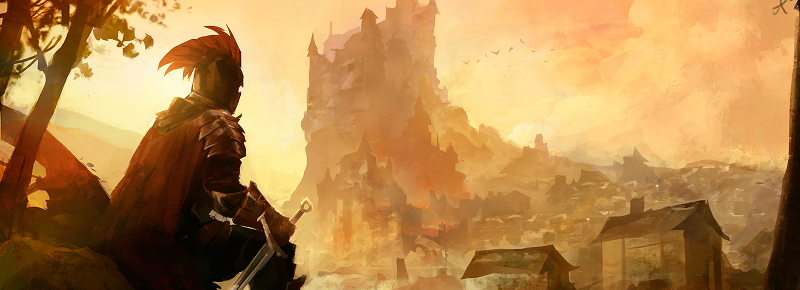
Your character's journey is just beginning. A good backstory is a great foundation to build on.

Work in progress

Your character should not be something that is completed once the first session rolls around. Instead feel free to add bits and pieces as you discover the world through playing. You are bound to find new aspects of the world, that your character could be connected to. Of course make sure that your GM is notified of these additions. And that it still fits with their vision of the game.

Find your story

If you have a great idea that you want to play with, but haven't found a game to play yet. Look at the games that are looking for players https://groupfinder.eu/list. Or post your player profile and find a tabletop rpg group https://groupfinder.eu/players to play with.

Other entries

deutschsprachige D&D5-Community
Communities

deutschsprachige D&D5-Community

German
Dungeons & Dragons
Discord server
Mit dem Pen & Paper System "Dungeons & Dragons" auf ins Abenteuer. Finde bei uns deine Spielgruppe und Gleichgesinnte. In unserem Discord findet ihr nicht nur nette Mitglieder zum Austauschen und Plaudern, sondern auch tolle Workshops, Stammtische und kreative Bereicherungen. Und natürlich eine Menge Spielrunden und Angebote für Einsteiger! Habt ihr Fragen zum Spielen, zu offiziellen Abenteuern, oder sucht einfach den Austausch miteinander? Auf unserem Server sind fast 24/7 andere Fans und SpielerInnen dieses Systems anzutreffen! Wir wünschen viel Spaß und viele Nat20! Links Discord server invite

Read more

Mutants and Masterminds 3rd Edition (2010)
Tabletop Roleplaying Games

Mutants and Masterminds 3rd Edition (2010)

English
Complex
Green Ronin Publishing
Mutants & Masterminds is a superhero role-playing game written by Steve Kenson and published by Green Ronin Publishing. The current 3rd Edition, which also serves as the engine for the DC Adventures game, was released in 2010. It is highly flexible, point buy system that allows players to build any superpower they can come up with, from classic caped crusaders and vigilantes to cosmic entities and mystical sorcerers. The system it directly evolved from is d20 System (2000) Description Mutants & Masterminds' game mechanics use a highly modified version of the d20 System. All characters in this game, from heroes and villains to the average person on the street, are defined by eight abilities, basic traits each character has to a greater or lesser extent. Abilities tell you how strong, smart, and aware a character is, among other things. The abilities are: Strength, Stamina, Agility, Dexterity, Fighting, Intellect, Awareness, and Presence System Overview & Key Features The Single d20 Engine The system is a true d20 engine. The twenty-sided die will be the only one you will need for the rest of the game. Every roll happens with the d20 as the baseline and then various bonuses and modifiers are added or subtracted. Point Buy Character Creation There are no random rolls for character creation. Players are given a budget of Power Points based on the campaign's Power Level. Every ability, from super strength to immortality, has a specific cost per rank, enabling high amounts of character customization and forging your unique superhero (or -villain). Effects Based Power Design Instead of a list of hundreds of pre defined spells or powers, the game uses Effects. If you want a fire blast, a freezing ray, or a telekinetic shove, you simply buy the "Damage" effect and apply descriptors like "Fire" or "Cold". This allows for endless creativity in how powers are themed. The Toughness Save vs Hit Points The game completely eliminates Hit Points. When a character is hit, they must make a Toughness resistance check. Failing the check results in cumulative penalties. A minor failure causes a "Bruise" penalty to future saves, while a massive failure can result in being dazed, staggered, or instantly knocked unconscious. Power Level Caps To keep the game balanced, the Game Master sets a Power Level (PL) for the campaign. This acts as a ceiling that limits the maximum total of a character's attack bonus, damage, defenses, and skills. This prevents one player from being mathematically untouchable while others struggle to contribute. Victory Points and Heroics Players can earn Victory Points (formerly Hero Points) for roleplaying their character's complications, such as a secret identity or a specific weakness like kryptonite. These points can be spent to reroll dice, recover from injuries, or use "Power Extractions" to perform stunts they haven't officially bought yet. Additional links greenronin.com - Official Green Ronin Publishing website d20herosrd.com - Official Mutants and Masterminds System Reference Document

Read more

Library submission guidebook
Platform guides

Library submission guidebook

What can I submit to the library? What does it cost me? How to stand out among all the other entries? Feature your project Submitting your project My project is already on the platform, can I change it? If you are a creator in the tabletop gaming space, then the Library is the perfect place to showcase what you have created. Whether you are part of a bigger team, or even a solo-creator, all projects are more than welcome to introduce themselves.  What can I submit to the library? Nearly anything and everything, as long as it is related to the tabletop gaming hobby space is welcome. Game systems If you have a tabletop game system that is missing from the library - we would love to learn more about it and introduce it to other players. Tools & Platforms Have you created a new generator of some kind? A map builder? Encounter calculator? Loot creator, tool for managing your worldbuilding? Or something else? Perfect place to showcase your creation. Youtube and Twitch channels If you are a video creator or a streamer and your channel is about tabletop gaming - then this is the place where to introduce yourself and find new followers. Blogs Do you have blog where you cover tabletop games, news or just write about the hobby itself? Perfect, we'd love to help spread the word Podcasts Whether you topic is a specific tabletop system, is a more general discussion of the field, or an actual play game - this is where you can gather more listeners. Regardless of the game system your podcast uses, as long as it is tabletop-gaming related. Artist Whether you create maps, character artwork or general illustrations for the tabletop gamers and projects. Show off your work and find those who could commission you. Communities Either you have created a local community for tabletop enthusiasts, or are a digital hub, like a Discord community - this is where you can recruit new members. Events Are you hosting a local event or convention? Tell the community about it and reach people who might be looking to attend. If your project does not fall in the categories listed above, do feel free to get in touch with us, we might find a suitable category (or create one) for your specific thing. What does it cost me? We are not paywalling anyone or anything, no matter how big (or non-existent) your budget is. Spreading the word and submitting to the library is free. Whether your creation costs money to use or is free to access, the library is the place for your project. Neither does it cost anyone anything to browse the library. How to stand out among all the other entries? As the library grows, so do the amount of other projects, but worthwhile and useful submissions deserve to be discovered. The best way to ensure that your project stands out, is to gather recommendations.  /images/general-media/1774004489_HpUsMncM.pngThink of recommendations as endorsements, likes, upvotes or anything else in the similar manner. By default the listings are ordered by the number of recommendations each project has. Every user on the platform can recommend your product and increase it's visibility. It also displays trust and usefulness among the community members. Spread your library page and have your devoted fans recommend your project. You can grab our Groupfinder Library badge set and display it on your website to direct users to your entry page. Download the assets /images/general-media/1774700596_OhgxSrZ3.png Feature your project You can also help support Groupfinder by getting it featured. That will move it to the top of the listings and will make sure that your project is going to get noticed. This is a paid feature, which helps us maintain and keep the entire platform up and running. If this sounds interesting to you, feel free to reach out to us (via library@groupfinder.eu) and we can discuss it further. Featured projects will also have the opportunity to decorate their library entry page even more. Adding additional banners for an upcoming or running crowdfunding campaign, specific limited-time deals or anything else. Submitting your project To submit your project to the library, we will need the following: A static cover image for the project (800x450px in size. Use this layout guide to get the best result) An appropriate description/text (written preferably in a third-person format). The longer and more in-depth, the better. Up to two images of the project, either screenshots of the project itself or illustrations to go alongside the text. Articles and/or Youtube videos that are best suited to be displayed on the entry page. (up to 6 in total). Any links that might also be relevant to the project. If you are an artist, be sure to include a method for contacting you (e-mail address). Send your submissions to us via library@groupfinder.eu We reserve the right to accept or decline submissions we see as not suitable for the library for various reasons. My project is already on the platform, can I change it? If you find your project already on the platform, then either we have discovered it ourselves and decided to add it, or it has been suggested to us by someone else. If you would like to add or change something in the entry, reach out to us and we would love to work with you

Read more

Looking for a group?

Find a tabletop group to join or players to invite.
Groupfinder is a free looking-for-group/players platform. By players, for players.