Covering the basics: How to start as a Dungeon Master

Published April 28, 2026 by Groupfinder Team

Overview

Covering the basics https://groupfinder.eu/library?category=guides-how-to&search=f1=133” is a easy-to-follow set of articles helping players get through the first steps of the game. You found a game to join? Well done, but now what?
Do you have what it takes to be a DM (Dungeon Master)? Short answer: yes Long answer: You might’ve spent most of your games on the other side of the DM screen or watching people masterfully direct their games on Youtube. All this might seem like a daunting and difficult role to fill - all the rules, ruling, voices, worldbuilding and keeping track of everything that is going on. Feels a lot for one person to manage. But here is the honest truth - most DMs are mostly just “winging it” as they go. They might not know every rule in the book or have every alleyway and farmhouse carefully plotted with intricate details for the world their players roam around. You don’t have to be a master of the game to be a dungeon master. It’s just a title, it doesn’t mean they know what they are doing.

The context effect

You may have watched various expert Dungeon Masters on different streams or Youtube actual plays. And thought that this is the minimum skillset you should have to even dare to take up the role of a DM. But keep in mind, context matters. These shows do not represent your average players or DMs. These are professional productions featuring professional actors. Your players are not expecting a cinematic masterpiece with custom miniatures, terrain or orchestral soundtrack. They are your friends, either new or old. And they just want to hang out, eat snacks, tell stupid jokes and see what happens when they push too many buttons. Don’t compare yourself to others, whether they are your last DM, or someone on Youtube. Your style will be your own. And your mistakes will be part of your journey. You are there to react to their actions and tell them what happens next. That’s it. If your players end the game session feeling happy with how they spent their time, you’ve won as a DM.
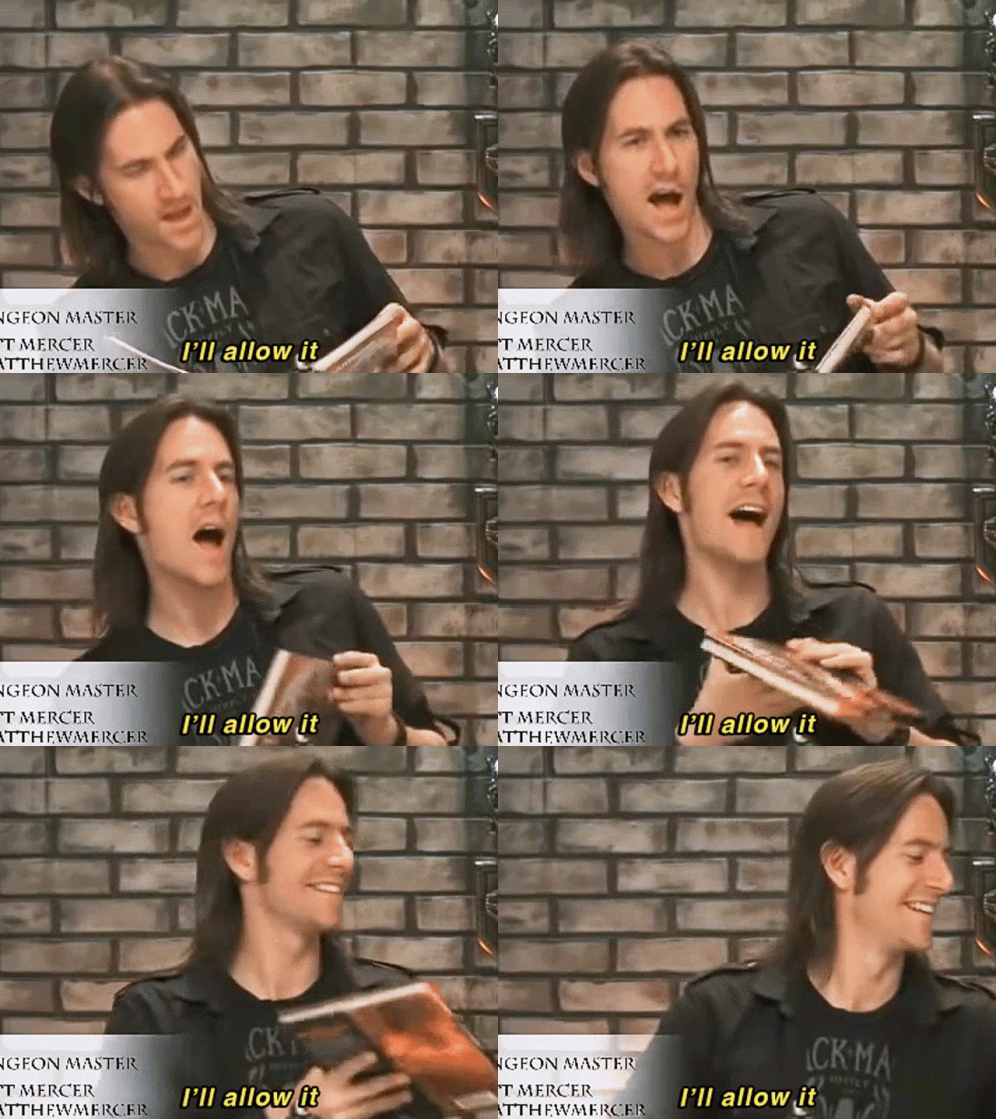
It is your game, as long as your players are enjoying it, you are winning

Start small

It is easy to fall into the pit trap of building your own epic world for the players to discover and enjoy. And while there is nothing inherently wrong with it, it would be better to start off small. You will reduce the amount of stress and headache you will endure by not preparing a 50-page lore document beforehand. Instead, consider running a oneshot. A self-contained short adventure, that starts and ends within one session. You will gather your bearings during the game, realize what parts of DMing you enjoy and what you would rather not focus too much on. Use a pre-written adventure. For D&D, you could look towards The Delian Tomb https://www.dmsguild.com/en/product/241073/the-delian-tomb or A Most Potent Brew https://www.dmsguild.com/en/product/186488/a-most-potent-brew-a-basic-rules-adventure. These include maps, monsters and all the relevant knowledge you need to run your players a game. Or grab one of the starter sets (ex. Heroes of the Borderlands https://www.dndbeyond.com/en/heroes) and run that. Make sure that you understand the whole story beforehand, so you know where the story is supposed to go. If, however, you feel like creating something of your own, you can simply build a oneshot that follows some specific rules. Entrance: A puzzle or a simple monster fight to get the players involved. Cause: A situation to tie the players’ characters to the story. A clear call to action to guide the characters towards the end-goal of the adventure. Problem: With the goal set, present your adventurers with a situation that requires them to overcome it. Whether by brute force, thinking outside the box, or something completely different. Here’s a DMing secret: You can have your players face a situation that needs solving but as a DM, you do not have to know what the right solution to that needs to be. Let your players attempt different approaches and if they come up with something that seems reasonable, take that as the solution. Final encounter: Your oneshot should be leading towards a finale. Whether it is a boss fight, or a grand puzzle or situation that requires effort and teamwork - anything goes. It should be connected to the previous blocks to establish a cohesive narrative story. The ending (optional): Once the final encounter has been resolved, you can offer your adventurers a conclusion, perhaps it is a treasure hoard, public praise or something different. Since it is a oneshot, you don’t really have to worry about consequences, as the story ends there. Keep in mind, that oneshots should be reactive. Players should be forced to react to situations and not given too much time to wander around, chat with Boblin the Goblin at the tavern, or get bogged down with planning.   A good idea would be to have some pre-made NPCs in the background, so you can pull those up at moments notice. These characters should not have intricate backstories that aren’t vital to the story itself. They may have a simple motive or goal, that can support the story at hand, but isn’t a vital piece of information, should your players completely ignore or miss encountering them. You can use a name generator (like
Fantasy Name Generators https://groupfinder.eu/library/fantasy-name-generators
) to prepare a list of various names to make it seem, like you had those characters prepared and planned ahead of time.

Pace over rules

Nothing kills the vibe of the game than having to spend ten minutes looking for the correct ruling for a situation. As a rule of thumb, it is recommended to spend up to a minute looking up the rules - and if by then you don’t have the correct answer, make a ruling on the spot. Just be transparent about it and let them know that this ruling might be wrong and is temporary, in the future this might get ruled differently. But for now, to keep the story going, you should decide on the spot. If you have a more experienced player at the table, consult them. As a DM you are already managing way more than one single player should be (you are still a player, even though you are a DM). And offloading some of those responsibilities to someone else is the right thing to do. The DM does not have to be the most knowledgeable player at the table - they are the narrative engine, not the wikipedia.
Don't spend too much time pondering the orb finding the correct ruling, keep the game going

A session zero

It is highly recommended to have a quick session zero before starting your first game. Whether it is a brief oneshot or the start of a longer campaign - leveling with your group will help you avoid misunderstandings in the future. Recommended reading: Library: Session 0 checklist: How to build a DnD group that lasts https://groupfinder.eu/library/session-0-checklist-how-to-build-a-dnd-group-that-lasts

Gather your tools

Now prepare your adventure. You will most likely spend a lot more time than you should preparing for the first session. But being somewhat overprepared will help you in the long run. Once you start understanding how DMing works, you will get better at preparing for each session, eventually cutting down on the time spent on prep.   A DM trick worth remembering and learning, is called “moving castles”. You may have prepared a location or an encounter for your players to discover or run into. But through the magic of player agency they head in the complete opposite direction to your prepared piece of content (it happens). Instead of scrapping the work you have prepared, you can simply move it, so that the adventurers still run into it. A worn-down castle filled with a tribe of goblins, waiting to ambush anyone entering the front gate? Simply move it, perhaps adjust some elements to fit the new location. Instead of goblins, they are now human mercenaries or bandits. Instead of a castle, it is a small village. This isn’t to say, that you should focus on railroading the players (although for a oneshot it would be highly recommended, that you keep your players on the track you have prepared). But re-using prepared content in a new and appropriate way is the smart play. Other than that, all you need to get started, are your dice (or digital dice, if that is more convenient for you), and some paper, to write down notes, events and questions for you to look up between sessions. Remember, you are a player too. You should be having fun, although it will feel intimidating and stressful at first, it will get better.
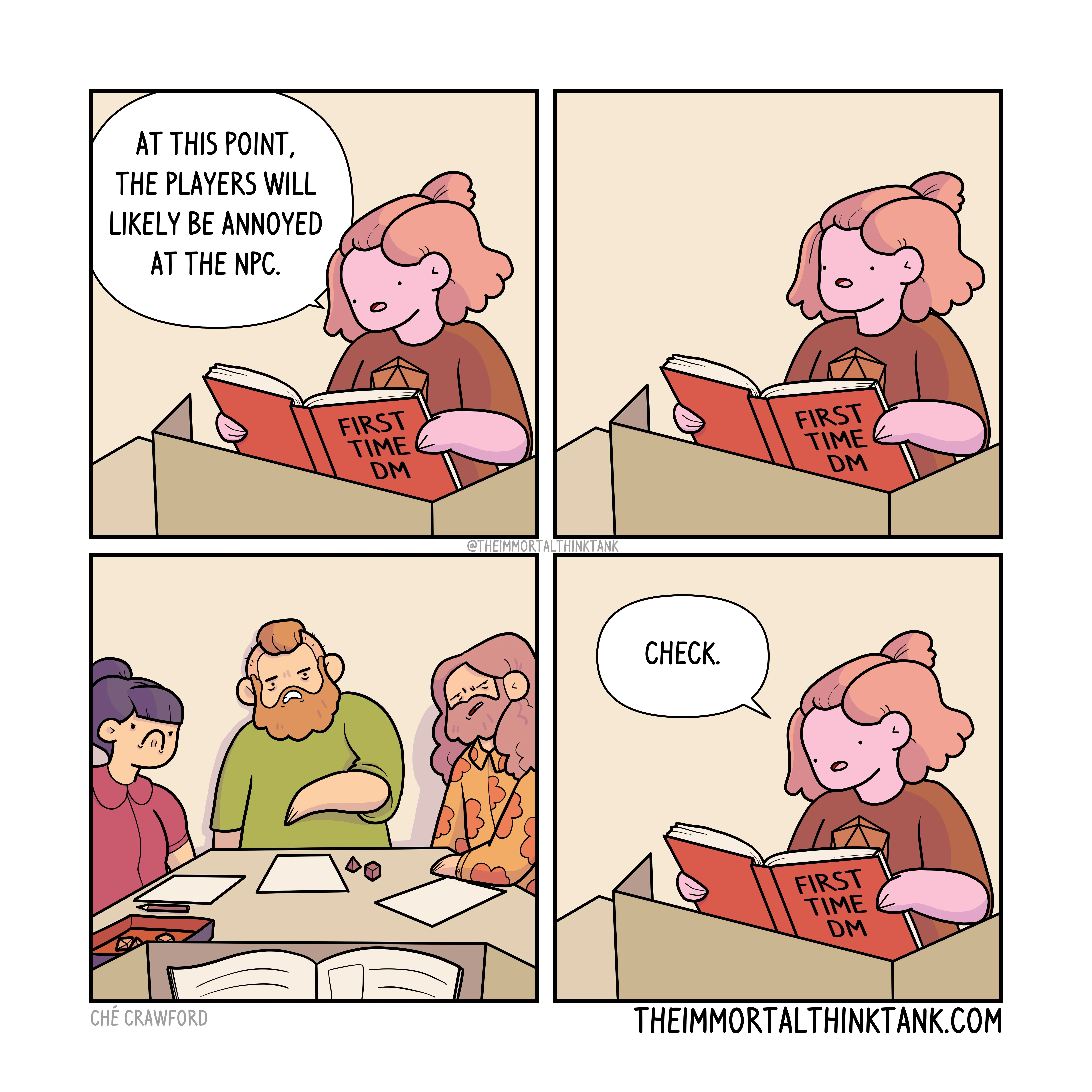
Take the leap

You are stepping into a very rewarding experience of the game. Even if you are not planning on becoming a recurring DM, you will gain a better understanding of the game and the system. This will, in turn, make you a better player. Guaranteed. If you are ready to give DMing a shot, you can start off by creating a group https://groupfinder.eu/addgroup on Groupfinder and find your players. Be sure to use the “Newbie friendly” tag to indicate the tone of the game. If you have a player in your group who has been interested in DMing, but has not had the courage to get started - “gently” send them this article, to nudge them to get started.

Other entries

The Ugly Goblin
Video

The Ugly Goblin

TTRPG
English
Dungeons & Dragons
The Ugly Goblin is a vibrant TTRPG media hub that thrives on the intersection of community, commentary, and the sheer chaos of tabletop gaming. Far from the polished, corporate feel of mainstream productions, the channel embraces an authentic and relatable "around the table" atmosphere, focusing on the stories, struggles, and triumphs that every player and Game Master experiences. Specializing in a wide array of content—from hilarious "horrors of the table" stories to thoughtful system reviews—the channel covers a massive spectrum of the hobby. While rooted in the mechanics of Dungeons & Dragons, The Ugly Goblin frequently ventures into the broader world of indie RPGs and community trends, providing a voice for the everyday gamer who loves the hobby for its quirks and its community. Links youtube.com - Youtube channel patreon.com - Patreon page discord.gg - Discord server

Read more

How to find a D&D group online: The ultimate guide for 2026
Guides & How-to

How to find a D&D group online: The ultimate guide for 2026

TTRPG
Dungeons & Dragons
Guides
Are you just getting into D&D? You most likely already know the hardest part of playing Dungeons & Dragons isn't defeating a Red Dragon or figuring out what kind of bonuses should apply when picking a lock. The actual "Big Bad Evil Guy" of any tabletop roleplaying game (TTRPG) is scheduling and finding a reliable group. Whether you are brand new to the hobby, having just either discovered Critical Role or finished the last season of Stranger Things, or you are well-versed in the tabletop gaming scene, you are most likely aware that finding a group or other players is not as easy as you might’ve thought initially. Even though Dungeons & Dragons is more popular than ever, it still can feel like you are the only one interested in trying it out. We have compiled this article to try and help you find your way to your next D&D game. Quick Steps to Find a Group: 1. Create a Groupfinder player profile. 2. Define your schedule and timezone. 3. Browse open games or wait for a DM to find you. The traditional methods: forums and LFG subreddits The internet works. It works in the sense that there are others like you looking for a game to join. But navigating through all the different mediums is going to most likely feel like a chore. Reddit (r/lfg and r/LFG_Europe) The standard answer to "where to find D&D players" has historically been Reddit. The Pros: A massive volume of players. If you post a compelling game pitch as a DM, you will get dozens of applications within hours. The Cons: Because of the sheer volume, it is incredibly easy for your post to get buried. Players often find themselves filling out dozens of Google Forms without ever hearing back. Plus, formatting restrictions make it difficult to filter for specific needs like exact timezones (a massive headache for EU/Global players), Virtual Tabletop (VTT) preferences, or safety tools. Discord LFG channels Many TTRPG YouTubers, podcasters, bloggers, game systems, and communities have their own dedicated Discord servers with LFG channels to allow players to advertise their interest. The Pros: Discord is great for instant communication. You can start a chat with potential party members quickly and in real-time to see if your personalities fit before committing to an actual game night. The Cons: Discord LFG channels are essentially endless scrolling text feeds. Searching through thousands of chat messages to find a oneshot or campaign that fits your specific schedule is exhausting. The "paid vs. free" game debate Over the last few years, there has been a massive rise in "Pro DMs" hosting games on platforms where players pay per session (often $15 to $30+). If you have the budget, paid games practically guarantee that a session will actually happen, as players are financially invested. However, for many, the soul of D&D is about gathering around a virtual table as friends playing a game for free. While we are in no way trying to negatively portray paid games, they will most likely not have that “organic” feel to it that regular games do. For many players, it might be the perfect fit. Games happen when they are scheduled, the DM is prepared for the session and will most likely have figured out all the technical aspects beforehand. The modern solution: dedicated LFG platforms If you want to stop scrolling through forums and social media posts, you need a tool actually built for the job. If you are looking to join a D&D campaign online (or even find a local game), Groupfinder is the best dedicated tool available today. Built specifically to solve the age-old problem of TTRPG matchmaking, it completely streamlines the process. Why a dedicated platform beats a forum post Timezone & schedule filtering: No more guessing timezone conversions. On Groupfinder, you can filter game and player posts by timezones. That way you will know that what you are seeing will match your preferences and your real-life schedule. Detailed player profiles: Instead of pitching yourself to new DMs, you can create your permanent player profile (How to write a great player profile that helps you find a DnD group). You can introduce yourself, mark down any specific preferences, or even describe your previous experiences if you have any. You can also list your preferred systems (D&D 5E, D&D 5.5E, or if you are open to trying out other systems, those too can be listed), and let groups search for you. Advanced game tags: You can filter groups and players by various tags. Whether it is for themes, topics, inclusivity, or experience level, such as "Beginner friendly," "Roleplay focused," or "LGBTQ+ friendly." How to make your player profile stand out Whether you are posting on a forum or filling out your profile on Groupfinder, what you write matters. DMs sift through a lot of profiles; here is how to make yours stand out: Be Honest About Your Experience: DMs do not mind beginners! For many, it might be exactly who they are looking for. New DMs are more likely to feel more comfortable playing with other newbies. Their mistakes are less obvious and you will all learn together. Define Your "Pillars of Play": Do you prefer emotional roleplay and character voices, or are you more interested in tactical, grid-based combat? Be detailed about what you like and dislike about the game. List Your dealbreakers: If you are not comfortable with certain topics, mark them down. Being open about those will give the reader a good overview of whether you would fit their group or not. The age-old saying “No D&D is better than bad D&D” holds true. Red flags to watch out for Once you find a group that seems to be a good fit on paper, you still need to ensure whether the game style and dynamic between players is for you. If the game has a “Session zero”, you can get a better understanding of who the people involved are, what they are looking for, and whether your preferences align. Watch out for these red flags: The "Main character syndrome": If a player is constantly talking over others during introductions or insists their homebrew character concept overrides the DM's worldbuilding, it is a sign of bad table etiquette to come. This might be something that, when addressed, can be resolved - but don’t let those instances go by without taking note. Poor Communication: If the group doesn’t seem to be able to respond to important messages within a reasonable time, it might indicate that the group members are not that interested or have the time required to manage an ongoing game. Prioritizing safety: The "Session 0" essentials Finding a group is only half the battle; ensuring the group is a safe and comfortable environment for everyone is what makes a campaign last. Modern TTRPG matchmaking relies heavily on **Safety Tools** to set boundaries before the first die is rolled. Commonly used safety tools If you are joining a new group, look for these terms in the game description. If they aren't there, don't be afraid to ask the DM which ones they use: Lines and Veils: "Lines" are hard limits (topics that will never be in the game). "Veils" are topics that can happen but "fade to black" without graphic detail. The X-Card: A tool that allows any player (or the DM) to edit out content in real-time if it becomes uncomfortable. Monte Cook Games RPG Consent Checklist: A physical or digital form where players check off their comfort levels with various horror or social themes. Why this matters for online play When playing with strangers online, communication can sometimes be misinterpreted. Using these tools isn't about being "sensitive"—it's about professionalism and clear communication. Groups that use safety tools have a significantly lower "ghosting" rate because expectations are set early. On Groupfinder, we encourage all DMs to list their preferred safety tools in their group descriptions. This helps players find the right "vibe" and ensures a long-lasting adventure. Frequently Asked Questions (FAQ) Can I play D&D online for free? Yes. The basic rules for Dungeons & Dragons are available for free online (view the Basic Rules here). You do not need any books to get your first few sessions going. You can use free Virtual Tabletops like Roll20 or Owlbear Rodeo, talk over Discord, and find your group for free using Groupfinder. Will I need a webcam to play D&D? Not necessarily! While some groups prefer playing with cameras on to read facial expressions during roleplay, many groups play "audio-only" using just a microphone. What if I haven’t played D&D or any other TTRPG before? Not to worry - everyone has to start somewhere, just like you. If you have found a beginner-friendly group, feel free to ask any question, no matter how simple it might seem. You can also find a multitude of resources online. But be aware that you will never know everything about the game. That is not how it goes - knowing where to find information is how you get by. Stop searching and find your group Finding an online D&D group might seem like a daunting task. But in reality, you just need to put yourself out there and start your search. It might take weeks before you get contacted by a group. Remember to keep your post “bumped”. That will move your profile in front of all the other listings, refreshing it to the top. You can bump your post every day. Your profile also doesn’t have to be perfect from the start. Whenever you think of something to add, just return and edit your post. Feel free to share your profile link in other channels, you no longer have to spam individual messages - you now have a player profile that introduces you and your preferences. Create your free player profile on Groupfinder today, browse open games, and let the perfect campaign find you.

Read more

Echoes Under Ashwood
Actual Play & Podcasts

Echoes Under Ashwood

English
Actual Play
Call of Cthulhu
Echoes under Ashwood is a Gen X collaborative storytelling podcast exploring slow-burn cosmic horror through a Call of Cthulhu–inspired campaign set in the fictional town of Ashwood, Ohio. Brought to you by the questionable team at Role For Sanity. Blending small-town mystery, psychological dread, and character-driven actual play, the series follows former misfits returning home to confront repressed memories and something far older waiting in the woods. This is mature, atmospheric horror for listeners who prefer tension over jump scares, where the story unfolds through sound design, improvisation, and the quiet realization that the past is not finished with you. Links roleforsanity.com - Role For Sanity website spotify.com - Spotify feed podcasts.apple.com - Apple Podcasts feed youtube.com - Youtube channel patreon.com - Patreon page

Read more

Looking for a group?

Find a tabletop group to join or players to invite.
Groupfinder is a free looking-for-group/players platform. By players, for players.